
Following the publication of our article The Case for the Canonization of Grigory Rasputin, many were quick to ask why the “holy peasant” was not canonized yet, if he indeed met every criteria for Orthodox canonization. Fundamentally, the fact is that despite Rasputin’s holy life, his growing public veneration, and even his support among important clergymen within the church, corrupt Synodal Commissions have decided to comply with external liberal pressure, rejecting the glorification of the most slandered man in Russian history.
Legitimacy
The veneration of Rasputin has been observed even among prominent members of the Church. Archimandrite Kirill (Pavlov), confessor to Patriarch Alexy II, venerated Rasputin, holding him in high regard as a slandered righteous man.1 Similarly, Elder Ieronim (Verendyakin) stated that “Rasputin was a man of God, a supplicant for the Tsar, a sufferer for Russia.”2 He blessed Igor Evsin’s book “The Slandered Elder” in defense of Rasputin. Elder Nikolay Guryanov also famously venerated Grigory Rasputin, supporting his glorification and the creation of Icons depicting him.3 Others who believe that Rasputin was slandered include Fr. Andrew Phillips, Hieroschemamonk Raphael (Berestov), Fr. Dmitry Dudko, Bishop Tikhon (Shevkunov), Metropolitan John (Synchov), Metropolitan Vikentiy of Tashkent, Archbishop Ambrose (Shchurov), Archimandrite Georgy (Tertyshnikov), Archpriest Valentin Asmus, Archpriest Artemy Vladimirov, and many more well-known members of the Church.4 The list of Rasputin venerators is truly endless, and not limited to “young converts” as some of our detractors have previously claimed.
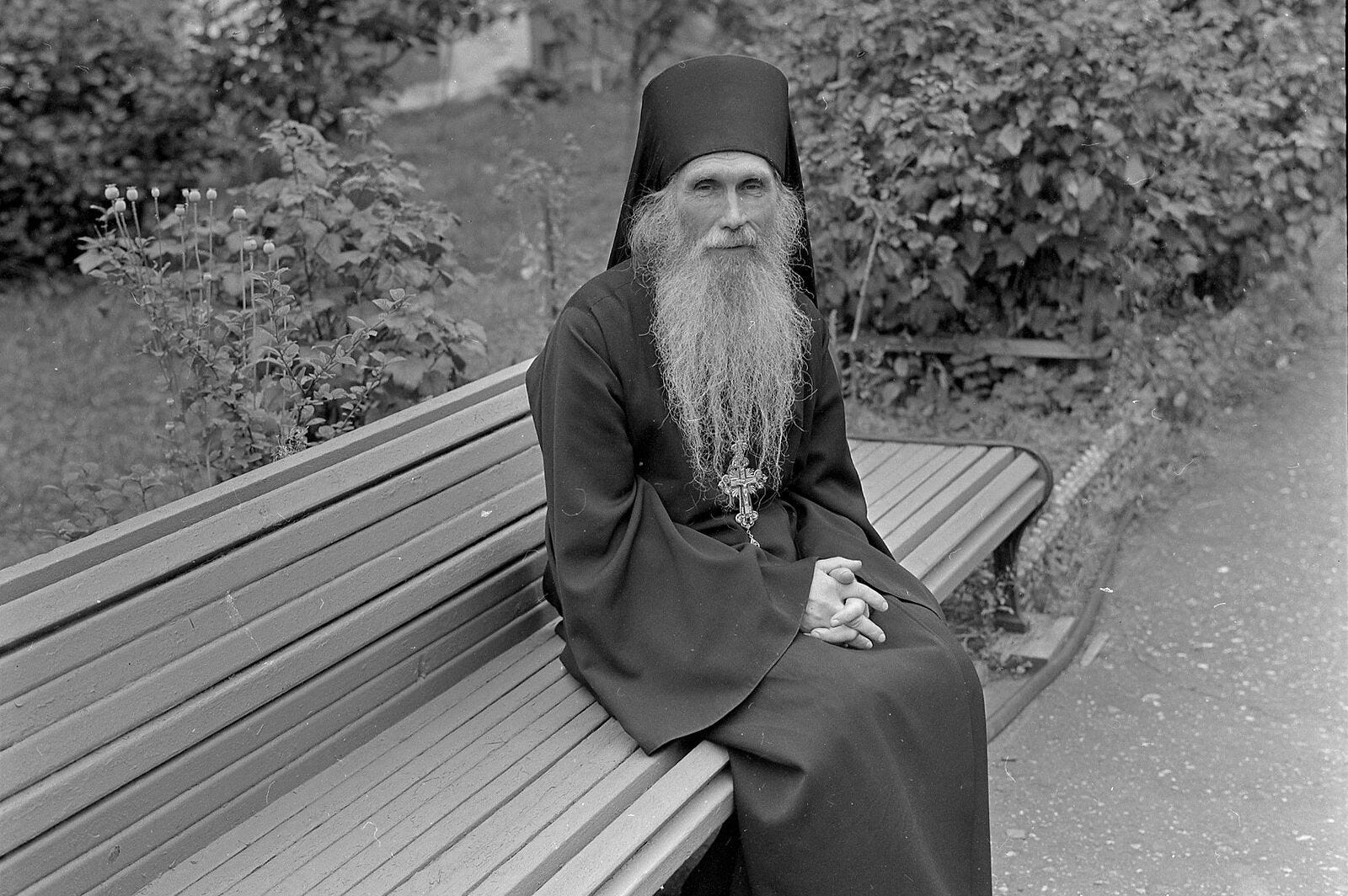
Seeing that many important members of the Church held and still hold strong views in favor of the glorification of Grigory Rasputin, the question remains: if such support exists, why has canonization not yet occurred? In fact, the rejection of his canonization in 2004 by The Commission on the Glorification of Saints of the Holy Synod of the Russian Orthodox Church seems to contradict not only the historical evidence available, but even the spirit of the Church and its members.
A common objection is the fact that Patriarch Alexy II himself held a negative opinion of Grigory Rasputin.5 However, this must be viewed in its specific historical context. When Patriarch Alexy made negative statements about Rasputin, the only in-depth historical study of his life was Oleg Platonov’s book. Nowadays, we have access to rich historical work by historians such as Sergei Fomin, Alexander Bokhanov, Igor Evsin, and others who have dedicated years to exploring the “holy peasant’s” life. Hence, the lack of available information may have affected the formation of the Patriarch’s opinion. In addition, this negative view was formed after the suspicious report on the canonization of the Romanov Royal Family, which unjustly slandered Rasputin and likely prejudiced the Patriarch against him. This strange report will be analyzed below.
Russian Orthodox Church Commission for the Canonization of the Royal Family
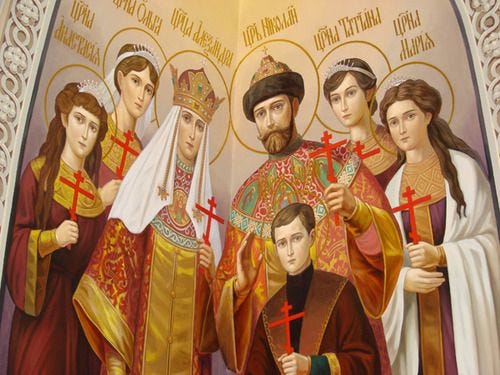
In the 1990s, the Russian Orthodox Church began an investigation into the Romanov Family to establish whether glorification was possible. Several Church investigators looked through the archives to unmask the truth of — at the time — a very slandered family. “No one even considered glorifying the Tsar back then, such a negative perception had been formed of him thanks to Soviet propaganda.”6 As was to be expected, opponents of the canonization brought up the Romanovs’ relationship with Rasputin as an obstacle to their glorification. However, the evidence collected by the commission surprisingly seemed to suggest that the conventional view regarding Rasputin was historical slander. Archpriest Valentin Asmus recalls how one of the commission members, while reviewing the report on Grigory Rasputin, said “It appears we are canonizing Rasputin!”7 Even Metropolitan Juvenaly (Poyarkov) — who would later on write the infamous liberal report on Rasputin for the 2004 Commission — stated that “Judging by [the Commission’s] materials, Rasputin should be glorified.”8 It seemed like all the historical evidence pointed towards the rehabilitation of Grigory Rasputin; his canonization was imminent. Strangely, all this information went missing from the final report which once again reaffirmed the conventional propagandistic view of Rasputin.
It is often overlooked that the commission that ended up canonizing the Romanovs was marked by hostile interference from the press and anti-Christian subversive actors within the Church. It is no mystery that the Russian press attempted to foil the canonization of the Romanov Royal Martyrs,9 aided by individuals such as Deacon Andrey Kuraev, Professor Alexei Osipov, and Metropolitan Nikolai (Kutepov). The anti-Christian lobbies, failing to prevent the canonization of the Romanovs, quickly moved to exclude all evidence of Rasputin’s righteousness from the report, making sure that the image of the “degenerate drunkard” would remain there for decades.
The 2004 Commission on the Glorification of Saints of the Holy Synod of the Russian Orthodox Church
In October, 2004, the Commission on the Glorification of Saints of the Holy Synod of the Russian Orthodox Church held a meeting to discuss several questions of faith and veneration. The results were, among other things, the rejection of any sort of canonization for Grigory Rasputin. This is often enough for skeptics and anti-Rasputin critics to reject his canonization, yet such ideas only stem from ignorance and lack of research.
As part of this commission, a report was submitted by Metropolitan Juvenaly (Poyarkov) regarding the life of Grigory Rasputin. For this report, rather than consulting credible historical sources, the Metropolitan used liberal and Bolshevik sources that slander not only Rasputin but also the Tsar and his family. His two main sources were the book “The Holy Devil” by the anti-Christian apostate Sergei Trufanov (Iliodor), and the fictional memoirs of Vera Zhukovskaya, who never personally knew Rasputin and cited atheist sources of information as part of her work.10 This report also states that Rasputin was killed by people “sincerely devoted to the Tsar” which we know to be blatantly false.11 Felix Yusupov — Rasputin’s murderer and well-known bisexual transvestite12 — infamously stated, “No one can replace Rasputin, thus his elimination will have positive consequences for the revolution.”13 In writing this report, Metropolitan Juvenaly not only displayed extreme ignorance and irresponsibility, but also found himself disagreeing with modern Orthodox Christian historiography in favor of liberal and Bolshevik sources. This Orthodox historiography includes the work of Metropolitan John (Snychov) of St. Petersburg, who supported Rasputin. Rather than representing the Church’s authoritative opinion, Metropolitan Juvenaly’s negligent report represented historical ignorance and animosity against Metropolitan John and other supporters of Rasputin.
It is important to note that Metropolitan Juvenaly was psychologically blackmailed by the liberal press throughout this whole process, (as they did to the Bishops in the Commission for the Canonization of the Romanovs)14 this time successfully influencing the results to achieve their defamatory liberal agenda.15 This report also knowingly concealed objective archival sources that exonerated Rasputin from the accusations of his slanderers, choosing instead to “repeat slanderous rumors orchestrated by the enemies of Russian Orthodoxy and the Monarchy to undermine the Tsar’s authority.”16 It is no wonder that “radio stations hostile to Russia — the BBC, the Voice of America and Israel (sic), Radio Liberty, and Deutsche Welle — unanimously endorsed Juvenaly’s report ‘as an attempt by the healthy forces of the Russian Church to repel reactionaries and obscurantists.’” Oleg Platonov, a prominent Russian historian who has studied all the archival sources discussing Grigory Rasputin’s life and work, provided a long and detailed refutation of Metropolitan Juvenaly’s report, which unfortunately determined the anti-Christian results of this liberal commission. Likewise, historian Anatoly Stepanov thoroughly exposed all the corrupt errors and flaws of the commission, highlighting many suspicious elements, such as the fact that Appendices No. 1, No. 2, and No. 3, were published several years after the Commission took place, while only Appendices 4 and 5 were initially available to the public. He also mentions that specific priests who favored Rasputin were unfairly targeted by the commission.17 Father Sergei Cechanichev provided his own refutation.18 In summary, the singular opinions of some Church liberals must not influence the Orthodox faithful into ceasing the veneration of a holy man such as Grigory Efimovich Rasputin.
Conclusion
Hence, it has been demonstrated that Rasputin not only enjoys the support of influential members of the Church, but is also seeing his veneration grow organically, both in Russia and abroad. We are actively contributing to these efforts in the English-speaking world.
The aforementioned commissions — frequently cited by detractors in an effort to portray Grigory Rasputin as an evil man — were shaped by external pressures and personal interests, and thus cannot be regarded as authoritative or legitimate.19 Church liberals, while reluctantly accepting the glorification of the Romanovs, secured a minor victory by slandering Rasputin, openly welcoming the results of the corrupt 2004 Commission. This alone suggests that such commissions reflect an unfortunate case of political infiltration within the Church, rather than an unbiased pursuit of truth.
Ultimately, Rasputin remains uncanonized not because of any shortcomings in his Christian life, but because coordinated opposition, both within and outside the Church, has actively sought to prevent his glorification. In doing this, they have disregarded all honest historical research, as evidenced by the commissions.
Hopefully, it isn’t too late to recover the historical record and rehabilitate the legacy of the most slandered man in Russian history.
“Do not strive for honors, just follow and search for God and everyone will listen to you”
Grigory Rasputin
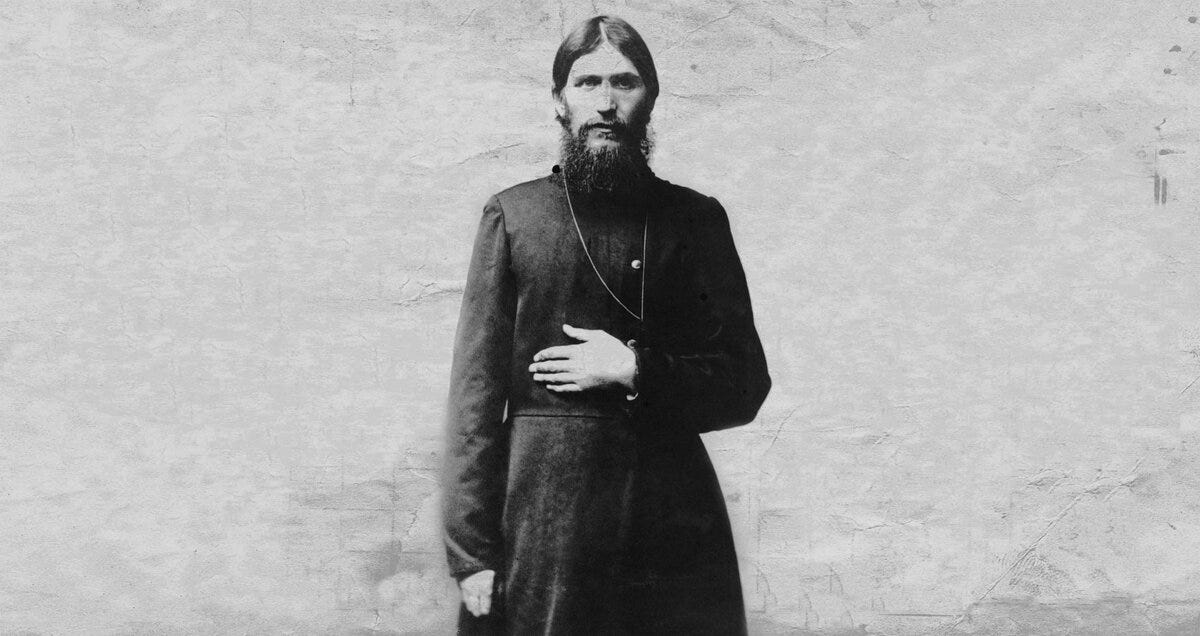
Letter to Igor Evsin’s wife Irina , 2002, in Григорий Распутин. Прозрения, пророчества, чудеса
“Григорий Распутин и мы,” Ruskline, December 29, 2012, https://ruskline.ru/analitika/2012/12/29/grigorij_rasputin_i_my.

“Григорий Распутин и мы,” Ruskline.
Andrei Zolotov Jr., “Orthodox Church Takes on Rasputin,” The Moscow Times, February 5, 2003, https://www.themoscowtimes.com/archive/orthodox-church-takes-on-rasputin.
“Григорий Распутин и мы,” Ruskline.
Протоиерей Valentin Asmus, “Судьба России была именно такой,” Ruskline, December 24, 2004, https://ruskline.ru/analitika/2004/12/24/protoierej_valentin_asmus_sud_ba_rossii_byla_imenno_takoj
Ibid.
В. Фомин, “Церковные либералы заклинают архиереев. Судорожные попытки не допустить канонизации императора Николая II,” Pravoslavie.ru, August 11, 2000. https://www.pravoslavie.ru/press/zaklina.htm
Oleg Platonov, “Старец Григорий и церковные либералы,” Русская Народная Линия (Ruskline.ru), November 3, 2004, https://ruskline.ru/monitoring_smi/2004/11/04/starec_grigorij_i_cerkovnye_liberaly.
Metropolitan Juvenaly (of Krutitsy and Kolomna), Приложение №4 к докладу митрополита Крутицкого и Коломенского Ювеналия, Председателя Синодальной комиссии по канонизации святых. К вопросу о канонизации Царя Ивана Грозного и Г. Е. Распутина, Sedmitza.ru, https://www.sedmitza.ru/lib/text/429736/
Felix Yusupov, Lost Splendor, 80-84
“Interrogation of V. A. Maklakov by N. A. Sokolov,” in Regicide Investigation: Secret Documents (Moscow, 1993), 532.
В. Фомин, “Церковные либералы заклинают архиереев”
The journalist Sergei Bychkov provocatively attacked and manipulated Metropolitan Juvenaly to ensure a negative portrayal of Rasputin.
See Bychkov S. God save us from the Tsar. They want to canonize Ivan the Terrible and Rasputin // Moskovsky Komsomolets. - December 16, 2002.
& Bolotin L. What is a deacon of “all Russia” versus the Royal Abbot of the Russian land? // Russkaya Liniya, 12/22/2002
Metropolitan Juvenaly, Приложение №4
“Кто дискредитирует Архиерейский Собор?” Ruskline, November 19, 2004, https://ruskline.ru/news_rl/2004/11/19/kto_diskreditiruet_arhierejskij_sobor/
“Враги Ивана Грозного и Григория Распутина дискредитируют Архиерейский Собор,” Ruskline, October 8, 2004, https://ruskline.ru/news_rl/2004/10/08/vragi_ivana_groznogo_i_grigoriya_rasputina_diskreditiruyut_arhierejskij_sobor/
“Григорий Распутин — последнее оправдание революции,” Ruskline, August 15, 2016, https://ruskline.ru/analitika/2016/08/15/grigorij_rasputin_poslednee_opravdanie_revolyucii
Either partially (Romanov Canonization Commission) or fully (2004 Commission on Rasputin and Ivan the Terrible)
because he was a tool of the Jews who created sexual blackmail in the Tsar’s household. his posse led to The Jews murdering the royal family