
A perverted, degenerate mystic who participated in wild orgies and manipulated the Tsar into losing his empire — such is the common myth of Rasputin, which would naturally lead any rational person to think I’m insane for even suggesting that such a vile individual should be canonized among the Saints of our Holy, Catholic, and Apostolic Orthodox Church. But what if I were to tell you that our historical conception of Rasputin has been wrong all this time, and he was actually a pious Orthodox Christian who died for his faith in Christ and loyalty to the Tsar.1 If you are scandalized by this massive paradigm shift, please remember that until recently (and still at present to a lesser extent), Tsar Nicholas II was considered both a “weak, stupid, incompetent reactionary”2 and a man who lived an evil life and was only canonized for the way he died. These are not fringe opinions, nor do they necessarily originate in non-Orthodox circles. Such beliefs have been propagated through the statements of “Church liberals”3 like Protodeacon Andrey Kuraev, who accused Tsar Nicholas II of being a cruel animal abuser4 and an evil individual who was only canonized for “the manner of his death.”5 It should be clear that a worse type of slander — even worse than that used to oppose the canonization of the Imperial Family — has been employed against Grigory Rasputin. We have been able to pursue historical truth and redeem the Imperial Romanov Family unto canonization despite conventional anti-Christian historiography condemning them completely. Why are we then so scandalized by an attempt to redeem their good and faithful friend Grigory Efimovich Rasputin from the historical lies used to slander him and the Romanovs?
The Orthodox Criteria for Canonization
Let us start by looking at what is necessary for one to be considered a Saint in the Church. The criteria for Sainthood in the Orthodox Church could be reduced to four attributes:6
1) Holy Baptism
2) An Orthodox mindset
3) A virtuous life
4) Miracles
If Grigory Rasputin fulfills these criteria, we must then consider the possibility of his canonization.
Holy Baptism
Grigory Rasputin was born on January 9, 1869 and baptized one day after his birth, on January 10, as an Orthodox Christian. He was named after Saint Gregory of Nyssa.
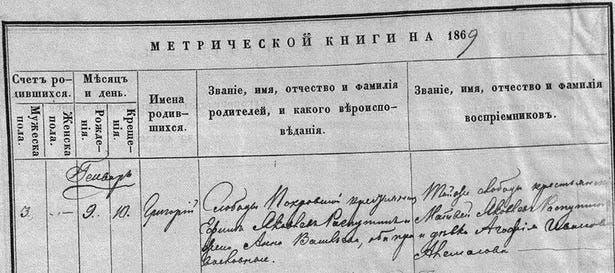
Page from the 1869 Pokrovskoye Church Register.
An Orthodox Mindset
Grigory Rasputin never strayed away from traditional Orthodox Christian beliefs. His house was filled with Icons and he prayed constantly,7 also going on several pilgrimages to Orthodox monasteries.8 He was unjustly accused of being a sectarian heretic and a degenerate. These accusations have been thoroughly refuted in my article “The True Religion of Grigory Rasputin.” Official Church investigations followed, which never managed to prove anything evil about him. In fact, the only thing they demonstrated, in Bishop Alexei’s words, was that Rasputin was “an Orthodox Christian” with “spiritual leanings (who) sought the truth of Christianity.”9 Each of the four investigations against Rasputin led to the same conclusion: Rasputin was a devout Orthodox Christian with no ties to any heretical sects.10
A Virtuous Life
The statement that Rasputin lived a virtuous life is perhaps the most scandalous assertion for those who still believe that he was a degenerate sexual deviant who managed to demonically influence the Romanovs. This view has no historical basis whatsoever and is only supported by inaccurate and false liberal and Bolshevik historiography. The truth is that Grigory Rasputin lived a life of faith, helping the poor and the needy with everything he had. During the investigations against him, it was revealed that Rasputin would donate every gift and donation he received to the Church.11 He got married through the Orthodox Church and baptized all his children Orthodox Christians.12 His main role throughout his 47 years of life was serving as a spiritual advisor and friend to the Romanovs, protecting them through the Grace of God. Tsarevich Alexei was healed several times by his miraculous power of healing, which represented a virtuous life of service. His death was also virtuous and noble, as he was martyred due to his religious convictions and loyalty.
According to Kosorotov, Rasputin’s Autopsy Report showed clear signs of prolonged torture, his body and genitals gruesomely disfigured by his murderers.13 These observations led historians to suggest that Rasputin, like Andrei, and later the Tsar and his family, was subjected to a ritual murder by the enemies of Orthodoxy.14
Miracles
Miracles can either be performed by a person in their physical life or after reposing in the Lord. Fundamentally, we of course understand that all of these miracles are God working through his Saints. Rasputin has several attested miracles both in physical life and after his martyrdom. During his life, he displayed miraculous healing powers in treating Tsarevich Alexei for hemophilia. No doctor in the Russian Empire knew how to treat Alexei for his disease, yet Rasputin, through his prayers, managed to save his life multiple times. In October, 1912, Alexei suffered an incident which left him bed-ridden and in need of surgery, which was virtually impossible due to his hemophiliac condition. Doctors did not know what to do and his condition continued deteriorating, his temperature rising by the hour. Then, on October 22, Grigory Rasputin sent a telegram to the Tsarina, saying: “God has seen your tears and heard your prayers. Grieve no more. Your son will live.”15 The next day, the Tsarevich’s temperature fell and his condition continued improving until he was completely healthy again. Grand Duchess Olga Alexandrovna, the sister of Nicholas II, would testify the following: “An hour later, my nephew was out of danger. Later that year, I met Professor Fedorov, who told me that the healing was completely inexplicable from a medical standpoint. Rasputin definitely possessed the gift of healing. There is no doubt about it. I saw these results with my own eyes, more than once. I also know that the most renowned doctors of the time were forced to admit it.”16 In summary, Grigory Rasputin displayed several miraculous gifts during his lifetime. As for miracles after his martyrdom, several have already been experienced by Orthodox faithful. Historian Igor Evsin has compiled several miracles attributed to Rasputin in his book “Grigory Rasputin. Insights, Prophecies, Miracles” (Григорий Распутин. Прозрения, пророчества, чудеса). These include the miraculous healing of sick people, prophecies about the future, and several myrrh-streaming icons17 of Grigory Rasputin.18
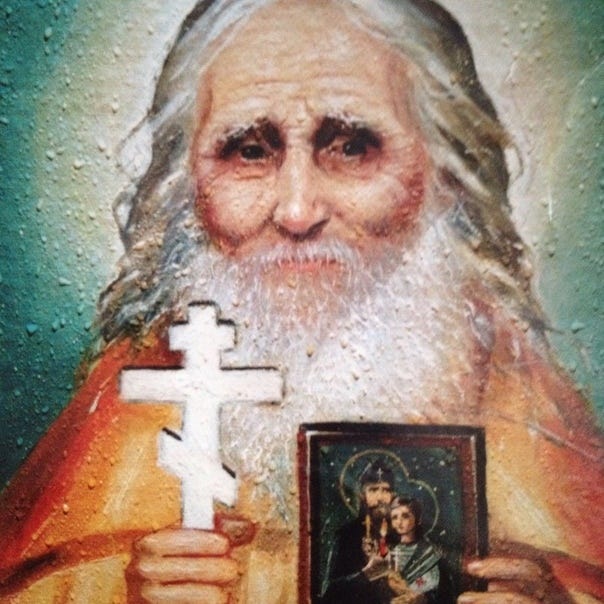
Myrrh-Streaming icon of Nikolay Guryanov holding an Orthodox Cross and a small icon of Grigory Rasputin and Tsarevich Alexei Nikolaevich
What about popular veneration?
Popular veneration is usually a fifth unspoken requirement for canonization. Dissenters may argue that this would exclude Rasputin from canonization, based on the premise that there is no popular veneration of Rasputin among the Orthodox faithful. However, this argument is untenable. For starters, veneration of Grigory Rasputin can be observed among several Orthodox Christians, specifically in Russia. His image is closely connected to that of Tsar Nicholas II, which has led people to venerating his friend Grigory as well.19 While it may not be as widespread as skeptics rigorously demand, it is nevertheless growing, and should not be used as a pretext to oppose the canonization of a holy man of God. After the Romanovs were canonized in 1981 by ROCOR, it took 19 more years for the Moscow Patriarchate to acknowledge this with an official canonization. How widespread was the veneration of the Romanovs in comparison to the liberal and Bolshevik slander against them? What about their physician Eugene Botkin who was canonized in 2016, almost 100 years after his martyrdom? There was clearly no widespread or popular veneration for him (although it was present, like in Rasputin’s case). However, church hierarchs correctly discerned that for popular veneration to grow, an official church canonization might be necessary. In Grigory Rasputin’s case, however, Church hierarchs believe the slander against him, coming from liberal and Bolshevik sources, and suppress veneration of the Strannik. How will there ever be popular and widespread veneration for a man who even Church hierarchs continue to slander? If the faithful are told by their bishops and priests that Rasputin is a fraud, how could widespread veneration ever emerge? This makes public veneration almost impossible, nothing short of miraculous in fact.
The Commission on the Glorification of Saints of the Holy Synod of the Russian Orthodox Church
In October, 2004, the Commission on the Glorification of Saints of the Holy Synod of the Russian Orthodox Church held a meeting to discuss several questions of faith and veneration. The results were, among other things, the rejection of any sort of canonization for Grigory Rasputin. In Patriarch Alexy’s words, “there is no reason to raise the question of the canonization of Grigory Rasputin, whose dubious morality and promiscuity cast a shadow on the august family of the future Royal Passion-Bearers Emperor Nicholas II and his family.” This is often enough for skeptics and anti-Rasputin critics to reject his canonization, yet such ideas only stem from ignorance and lack of research.
As part of this commission, a report was submitted by Metropolitan Juvenaly Poyarkov regarding the life of Grigory Rasputin. For this report, rather than consulting credible historical sources, the Metropolitan used liberal and Bolshevik sources that slander not only Rasputin but also the Tsar and his family. His two main sources were the book “The Holy Devil” by the anti-Christian apostate Sergei Trufanov (Iliodor), and the fictional memoirs of Vera Zhukovskaya, who never personally knew Rasputin and cited atheist sources of information as part of her work.20 This report also states that Rasputin was killed by people “sincerely devoted to the Tsar” which we know to be blatantly false.21 In writing this report, Metropolitan Juvenaly not only displayed extreme ignorance and irresponsibility, but also found himself disagreeing with modern Orthodox Christian historiography in favor of liberal and Bolshevik sources. This Orthodox historiography includes the work of Metropolitan John (Snychov) of St. Petersburg, who supported Rasputin. Rather than representing the Church’s authoritative opinion, Juvenaly’s negligent report represented historical ignorance and envy against Metropolitan John and other supporters of Rasputin. This report also knowingly concealed objective archival sources that exonerated Rasputin from the accusations of his slanderers, choosing instead to “repeat slanderous rumors orchestrated by the enemies of Russian Orthodoxy and the Monarchy to undermine the Tsar’s authority.”22 It is no wonder that “radio stations hostile to Russia — the BBC, the Voice of America and Israel, Radio Liberty, and Deutsche Welle — unanimously endorsed Juvenaly’s report ‘as an attempt by the healthy forces of the Russian Church to repel reactionaries and obscurantists.’” Oleg Platonov, a prominent Russian historian who has studied all the archival sources related to Grigory Rasputin’s life and work, has provided a long and detailed refutation of Metropolitan Juvenaly’s report, which unfortunately influenced the results of this liberal commission.23 In summary, the singular opinions of some Church liberals must not influence the Orthodox faithful into ceasing veneration of a holy man such as Grigory Efimovich Rasputin.
Orthodox Christians Who Venerated Rasputin
I plan to dedicate a future article to discussing the relationship between Rasputin and his contemporaries, who would later become Saints of the Orthodox Church. This section is meant to serve as a quick overview rather than a detailed analysis, with the intent of demonstrating that in the eyes of many canonized and uncanonized Saints, Rasputin deserved the same honor.
For starters, the Romanovs undeniably considered Grigory Rasputin to be a Christian martyr and Saint. While Saints are not infallible, their opinions must be held in high regard due to their holiness. Having established that the Romanovs did indeed live holy and faithful lives, we should also consider that they were the closest people to Rasputin and knew him better than any of us ever will.
Rasputin was loved by the Romanov Family until their deaths in 1918. At the time of their martyrdom, each of the Romanov daughters “wore around her neck an amulet bearing Rasputin’s picture and a prayer by the peasant ‘holy man’.” Tsarevich Alexei said: “There was a saint, Grigory Efimovich, but he was killed.” Alexei was the closest to Rasputin, and his reaction to Rasputin’s murder was heart-wrenching. “Vyrubova wrote: ‘The Tsar and the Tsarina decided not to tell him about Rasputin’s murder at once but when they finally did, Alexei Nikolaevich burst into tears hiding his head in his arms’.” The Tsarina stated that he was a martyr, and had a small book printed out titled “A New Martyr.” Rasputin died wearing a cross with the words “Save and Protect” and a bracelet with the letter N (for Nicholas) together with the Imperial two-headed eagle. Likewise, Tsar Nicholas died wearing a cross gifted to him by Rasputin.24
If they remained confident of his sainthood and holiness up until the moment of their martyrdom, then who are we to question their judgement? Furthermore, why must we stand in agreement with the Church liberals and their corrupted historiography in opposition to the Romanov Royal Martyrs?
Saints who regarded Rasputin as a holy man and a saint include: Saint John of Kronstadt, Saint Nikolay Guryanov, Saint Augustine (Pyatnitsky), Tsar Saint Nicholas II, Tsarina Saint Alexandra, Saint Olga, Saint Tatiana, Saint Maria, Saint Anastasia, and of course Tsarevich Saint Alexei. As for the Saints who opposed Rasputin, they will be explored on a case-by-case basis in the future. For now, it suffices to say that they were often ignorant or misled by slander coming from satanic individuals (like Trufanov).
Conclusion
Let’s summarize the facts. It is clear that Rasputin meets the Orthodox criteria for canonization, having: An Orthodox Baptism, an Orthodox mindset, a virtuous life, and miracles. Despite suppression from anti-Tsarist actors (even in the Church), the veneration of Rasputin is growing. It is also clear that the 2004 Church Commission is neither binding nor correct in its assessment of the historical and theological facts regarding Grigory Rasputin’s life. Metropolitan Juvenaly’s report is an insult to Orthodox Christians and should be dismissed as liberal meddling in Church affairs, rather than considered the opinion of the Orthodox Church. Finally, several prominent Orthodox Christians venerated Rasputin,25 including the Romanov Royal Family, which should allow us to venerate him in good conscience and hope for his canonization. Father Seraphim Rose actually stated that “In the Orthodox Church it is by no means discouraged to pray to ‘uncanonized’ saints. Actually, canonization only grants official status to what already exists unofficially.” Saint Grigory the New, pray for us!
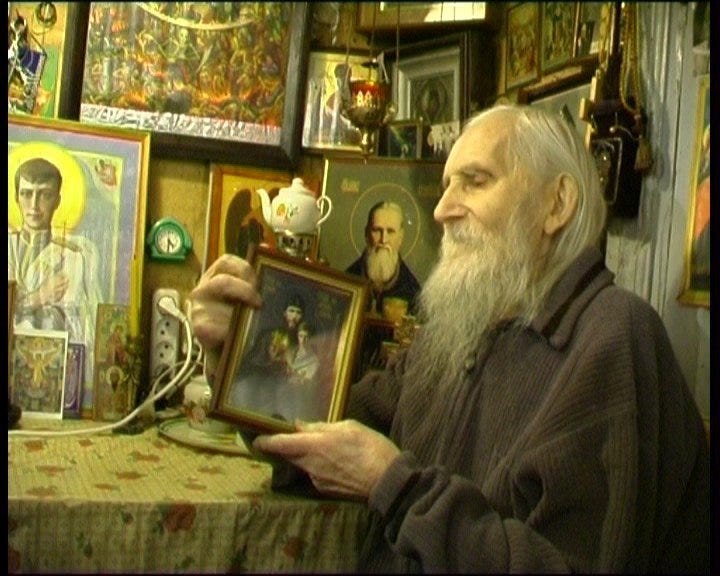
“Grigory is holy and a great Martyr before the Lord. His icons are needed; people have prayed before them, are praying, and will pray, and weep, as I do, weeping and praying before this image.”
Elder Nikolay Guryanov

Andrew Phillips, “Tsar Nicholas II: Myth and Reality.” Pravmir.com, October 20, 2012. https://www.pravmir.com/tsar-nicholas-ii-myth-and-reality/
“Church Liberals” is a term used by historian Oleg Platonov to describe the influence of subversive liberal actors within the Orthodox Church.
Pyotr Valentinovich Multatuli. “Правда и ложь об охоте Императора Николая II.” Русская народная линия (Ruskline.ru), August 23, 2010. https://ruskline.ru/monitoring_smi/2010/avgust/24/pravda_i_lozh_ob_ohote_imperatora_nikolaya_ii.
Andrey Kuraev. “У него были все основания для того, чтобы озлобиться …” Правмир, 17 июля 2006. https://www.pravmir.ru/u-nego-byli-vse-osnovaniya-dlya-togo-chtoby-ozlobitsya/
Bishop Gregory of Christianoupolis. “The Criteria for Sainthood According to Orthodox Tradition.” HOTCA.org, July 31, 2013. https://www.hotca.org/orthodoxy/lives-of-saints/452-the-criteria-for-sainthood-according-to-orthodox-tradition/
Margarita Nelipa, Killing Rasputin: The Murder That Ended the Russian Empire, p 33
Oleg Platonov, Grigorii Rasputin i Deti Dyavola, p 61
Margarita Nelipa, Killing Rasputin: The Murder That Ended the Russian Empire, pp 34-35
Document No. 1, “Zaveduishemy komnatoi veshestvennih dokazatelsv”, 31 October 1917, [Petrograd], reproduced in Fomin, S., Grigory Rasputin: An Investigation, [Volume III] p 551
“During 1906 in October, affixed a gold cross to a church icon weighing nine zolotniks (1 zolotnik is 4.25 gm). During 1907 in April, Grigorii-Novy gave five thousand rubles for the construction of the proposed church annex. During 1908 in November, donated an 84% gilded cross weighing over one pound, plus a cross adorned with precious stones valued at ninety rubles. During 1909 and 1910 Grigorii-Novy donated to the church four silver lampadi [incense burners] weighing over four pounds, besides other church paraphernalia”
Document 45, “Raport Pokrovskogo … Episkopu Aleksiyu”, 9 November 1912, [Volume III], pp 638-639, reproduced in: Nelipa, M., Killing Rasputin: The Murder That Ended the Russian Empire, p 35
Smirnov, V and M., Neizvestnoye o Rasputine R. S., p 15
“Report of the Autopsy on the body of Grigori Rasputin by Professor Kossorotov, 20 December 1916” reproduced in Cook, A., To Kill Rasputin, pp 66-67
Maurice Paleologue, An Ambassador’s Memoirs, vol. 1, chap. 5, “September 12–October 28, 1914,” AlexanderPalace.org, accessed October 3, 2025, https://www.alexanderpalace.org/mpmemoirs/5.html
Igor Vasilievich Evsin, “Особые духовные дары Григория Распутина,” Русская Народная Линия (Ruskline.ru), March 25, 2013, https://ruskline.ru/analitika/2013/03/26/osobye_duhovnye_dary_grigoriya_rasputina.
Igor Vasilievich Evsin, “На Донбассе замироточила икона Григория Распутина,” Русский Монархист (Ruskmir.ru), December 3, 2014, https://www.ruskmir.ru/2014/12/na-donbasse-zamirotochila-ikona-grigoriya-rasputina/
Igor Vasilievich Evsin, “Чудеса Григория Распутина в наше время,” Русская Народная Линия (Ruskline.ru), August 8, 2014, https://ruskline.ru/special_opinion/2014/08/chudesa_grigoriya_rasputina_v_nashe_vremya.
Irina Aleksandrovna Vysotskaya, “Григорий Ефимович Распутин оболган,” Русская Народная Линия (Ruskline.ru), August 22, 2018, https://ruskline.ru/news_rl/2018/08/22/grigorij_efimovich_rasputin_obolgan.
Oleg Platonov, “Старец Григорий и церковные либералы,” Русская Народная Линия (Ruskline.ru), November 3, 2004, https://ruskline.ru/monitoring_smi/2004/11/04/starec_grigorij_i_cerkovnye_liberaly.
Metropolitan Juvenaly (of Krutitsy and Kolomna), Приложение №4 к докладу митрополита Крутицкого и Коломенского Ювеналия, Председателя Синодальной комиссии по канонизации святых. К вопросу о канонизации Царя Ивана Грозного и Г. Е. Распутина, Sedmitza.ru, https://www.sedmitza.ru/lib/text/429736/
Ibid.
Ibid.
Femi (@femibased), “On Rasputin and the Saints,” Thread Reader (threadreaderapp.com), July 7, 2022, https://threadreaderapp.com/thread/1545019627356536832
I am wondering if you have a source for the quote you put in the article: Tsarevich Alexei said: “There was a saint, Grigory Efimovich, but he was killed.”
I have never come across this before that I can recall.
(Author: Alexei - Russia's Last Tsesarevich: Letters, Diaries and Writings)
This is a great article. I have talked to monastics in America and it is a growing belief that Rasputin is a holy man.