
Since the fall of the Soviet Union and with recent historiographical developments, Tsar Nicholas II has undoubtedly undergone some historical justification. While his story remains on the fringe side of conventional history, those who seek to explore that era of Russian history may unfortunately find themselves ignorantly accusing the Tsar of being a weak-willed and evil ruler. Those who endeavor to find the truth, however, will soon realize that Nicholas was a genuine Orthodox Christian and a very able ruler, despite what anti-Tsarist propaganda may claim.
Within Orthodox Christianity, the Tsar and his family have been historically rehabilitated into Sainthood. This was achieved despite heavy opposition, even from Church hierarchs themselves.
This has unfortunately not been the case for probably the most slandered man in Russian history, Grigory Rasputin.
People, even Orthodox Christians, viscerally react to mentions of Rasputin’s name with negativity and hatred. After all, most of what they have heard are descriptions of this man’s purported degenerate lifestyle, quasi-satanic influence on the Emperor, and subversion of the Russian Empire. Little do they know that all of these rumors are untrue and unfounded, purely devised to bring down the Tsarist Monarchy. Historians such as Oleg Platonov, Alexander Bokhanov, Igor Evsin, Tatiana Mironova, Margarita Nelipa, and Sergey Fomin, among others, have initiated a project of historical rehabilitation, hoping that, just like with the Tsar, the truth will prevail and Rasputin will be vindicated. The “X” account @RasputinArchive contains rare information about Rasputin, accessible in the English language. This Substack is an extension of that account and is managed by the same person.
The story of Grigory Rasputin could well be written in several books, thousands of pages may not suffice. However, for this article I have chosen to focus on a specific aspect of the “Holy Peasant’s” life: his faith.
Beginnings
Rasputin was born on January 9, 1869 and baptized one day after his birth, on January 10, as an Orthodox Christian. He was named after Saint Gregory of Nyssa.
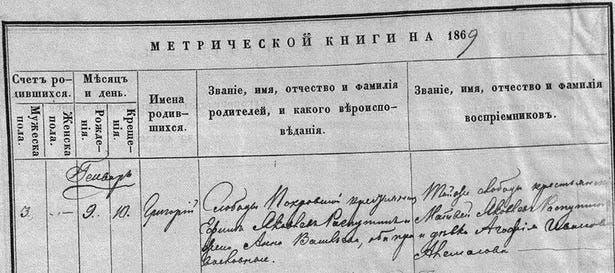
Page from the 1869 Pokrovskoye Church Register.
He was born in the Siberian village of Pokrovskoye, which was made up of 172 households. It also offered a small school, post office, police headquarters, and its own Orthodox Church. Despite unproven accusations, Grigory’s upbringing was a deeply religious and family-oriented one. He would help his family tend the animals and would load goods on boats and carts to make a living. He also matured in the Church, observing the holy days and Lenten periods, which he found more appealing than tending his father’s animals.1 He distinguished himself by reading passages from the Bible and discussing spiritual matters with others. As for the accusations that he was a delinquent or horse-thief, these were raised in 1915 and soon retracted after Rasputin sent the journalist who created them a telegram demanding proof of such crimes.2 Rasputin was described as having a gift of healing during his youth, which he would exercise to heal humans and animals in the village.3 In 1912, he spoke of his youth to a reporter from the Novoye Vremya newspaper: “In summer in my village, when it was warm and sunny and birds sang Edenic songs, I walked down the path and didn’t dare to walk in the middle of it. I dreamed about God, my soul was willing afar. I was crying and didn’t understand the meaning of my tears. When I got older, I often talked to my friends about God, about nature, about birds. I believed in good and kind things and often listened to old men about the lives of the saints, about great deeds, about the terrible and merciful Tsar. So my youth went in a kind of contemplation, in a dream, and then when life touched me, I hid in the corner and prayed secretly. I was unsatisfied and sad.”4 Clearly, Grigory Rasputin’s youth was marked by ardent zeal in the Russian Orthodox Faith, and signs of his gift of healing started to show. On February 22, 1887, Rasputin married Paraskeva (Praskovya) Fyodorovna Dubrovina through the Orthodox Church.5
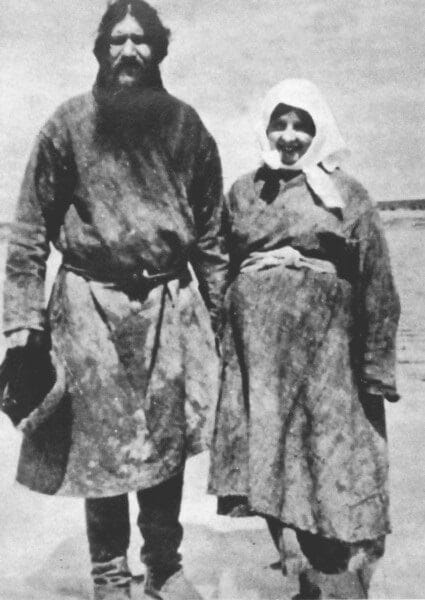
Grigory and Paraskeva met when they were each partaking their own pilgrimages at the Abalak Znamensky Monastery. They got married and lived in a two-story house that Rasputin purchased in Pokrovskoye. They had seven children, three of which survived into adulthood. All of them were baptized into the Russian Orthodox Church.6 In 1892, after Rasputin turned 23, he felt the calling to become a Strannik, which was a word used to describe rural religious wanderers of the Orthodox faith. A Strannik wasn’t ordained within the church but was considered to be a very wise teacher and follower of Orthodox Christianity. It must be noted that Nicholas II always described Rasputin as a Strannik. He visited several monasteries in Russia, including the Saint Nikolayevsky Monastery to venerate the relics of Saint Simeon Verkhotursky. Rasputin would later gift the Royal Family an icon of this Saint, which they would carry to their martyrdom in the Ipatiev House in 1918.7 Rasputin continued his pilgrimage through Valaam, Odessa, and Kiev.8 In 1893, he would go on to visit Mount Athos in Greece, and then Jerusalem (1911), which would inspire his book My Pilgrimage to Jerusalem.9 In 1904, he decided to visit Saint Petersburg to meet with Father (now Saint) John of Kronstadt, who was considered the spiritual leader of Russia and standing “high above the rest of the clergy”.10 Saint John would say this about Rasputin: “God granted you many gifts to help people, be my right hand.”11 Later on at mass, Saint John would say: “Among us is one who is more worthy, more deserving, to be the first to receive the Holy Mysteries. Here he is, a humble pilgrim, standing among you!”12 Rasputin stepped up to the ikonostasis, took communion, and actually blessed Saint John!1314 He would also go on to describe Rasputin as an “elect of God.”15 In 1905, Rasputin would meet the Romanov Royal Family, marking the beginning of a spiritual relationship that would last 11 years until Rasputin’s murder in 1916 at the hands of the transvestite occultist Felix Yusupov.16
Rasputin’s renown would grow as Russian society became aware of his strong Orthodox faith and his ability to express it despite being a semi-literate peasant from Siberia. This led to him meeting Bishops Theophan of Poltava and Hermogenes of Tobolsk, who would become his best friends, and later, his greatest adversaries. Theophan’s change of heart was due to evil influence in the form of a false confession by a woman, which led him to break the seal of confession and report this alleged crime to the Tsarina.17 The woman’s confession turned out to be a fabrication,18 but the damage to Rasputin’s reputation from one of his closest friends had already been done, for which Theophan would later bitterly repent during the emigration in France.19 Hermogenes, similarly, was influenced by an evil subversive named Sergey Trufanov, also known as Hieromonk Iliodor. Iliodor had personal issues with Rasputin and tried to murder him multiple times. Iliodor and Hermogenes beat up Rasputin and attempted to choke him, for which Hermogenes was banished to Smolensk, while Iliodor was confined in the Florishchev Hermitage. This didn’t sit well with Iliodor, who grew tired of the confinement and decided to quit his monastic vows. Almost theatrically, he wrote a letter to the Holy Synod stating: “I renounce your God. I renounce your faith. I renounce your Church” and signed it with his blood. Iliodor presents this apostasy proudly in his autobiography.20 It is important to note that Iliodor, along with Mitya Kozelsky, were the ones responsible for starting and disseminating the unfounded rumors about Rasputin having an inappropriate relationship with the Empress. This was a lie that the two men fabricated by maliciously altering correspondence between the Empress and Rasputin, stolen by Iliodor from Rasputin’s house in Pokrovskoye.21 “Hermogenes eventually realized that he had been deceived by Iliodor, comparing him to Satan and calling him a “despicable creature” who “instilled hatred, stubbornness, and malice” in him.22 Hermogenes would eventually be martyred by the Bolsheviks and drowned in the Tura River in front of Pokrovskoye, Rasputin’s village.23
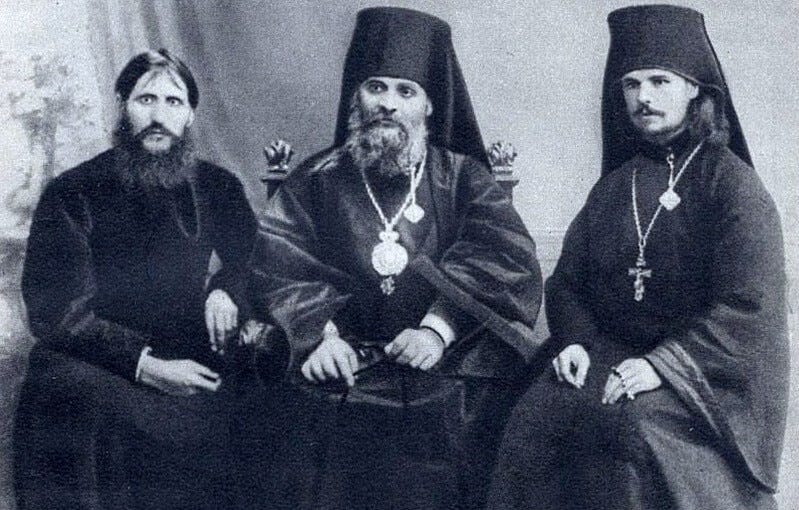
ST. PETERSBURG. Grigory Rasputin, Bishop Hermogenes and the apostate Iliodor, 1908.
A Khlyst?
Having observed Rasputin’s strong Orthodox faith despite the slander and harm exercised against him, we must now turn to the accusations of heresy and his relation to the Khlyst sect.
To start with some historical context, in 17th century Russia a degenerate pseudo-Christian sect was founded called the “Khlysts.” This sect engaged in ecstatic rituals and degenerate behavior, including — allegedly — self-flagellation and orgies.24 While they remained very fringe and isolated, their beliefs gained notoriety as the Russian Church began to fight such heresies.25 During the beginning of the 20th century, Grigory Rasputin was accused of belonging to that sect of ecstatic cultists, for which he was subjected to several investigations.
The First Investigation
When Rasputin returned to Pokrovskoye in May 1907, he learned that the village priest had undergone questioning and that church officials had raided his home. This was due to an allegation that Rasputin belonged to the Khlyst sect and was spreading the cult’s dogma in the village. Such allegations led to a secret investigation by the Russian Orthodox Church, set into motion by anti-Rasputin Bishop Antony (Karzhavin) of Tobolsk.26 This investigation involved:
The inspection of the Rasputin household.
The questioning of family members and their visitors.
The questioning of Pokrovskoye residents and the clergy.27
Rasputin was accused of participating in Khlyst rituals, singing Khlyst songs, and behaving inappropriately towards women. During questioning, the truth of this matter was revealed.
Grigory Rasputin’s father, Efim, declared that their guests from different parts of Russia only came to sing traditional Orthodox prayers and read the Bible.28 Paraskeva likewise confirmed that Rasputin was away from home for most of the year, and that the guests that visited their home on festival days sang spiritual songs and read the Bible.29 A witness stated that guests wanted to learn from Rasputin’s lifestyle and spiritual teachings.30 Another witness stated that he heard Orthodox prayers coming from Rasputin’s house and that he did not behave inappropriately with his female guests.31 Rasputin was deeply troubled by the gossip against him, and said that such accusations were “not right” while also disproving the ridiculous claims that he went to the bathhouses with women and engaged in inappropriate behavior with them.32 On a more personal note, Rasputin, as a pious Christian man, was emotionally hurt by all these accusations. He stated: “It is hard to live with all these wrongful accusations. God, they write horrible things! Give me patience and seal the lips of the enemies! Or grant me Your help and the eternal happiness of Your bliss.”33 Rather than defend himself against an endless barrage of slander, he showed humility and prayed to God for his acquittal. It soon became clear from the questioning that there was absolutely no evidence of Rasputin engaging in any Khlyst or degenerate behavior. In fact, the investigation only demonstrated that Grigory Rasputin and his family were faithful Orthodox Christians, having decorated all of the rooms in their house with icons, for example.34 It must be noted that during this whole charade, several members of the clergy jumped to Rasputin’s defense.35 One of them was Father, now Saint, Augustine (Pyatnitsky), who would be martyred by the Bolsheviks on Mochalny Island in 1918.36 In the end, the investigation exposed the malicious intent of those who were jealous of Rasputin’s piety and spirituality, and established him as a true Christian. However, the accusation that he was a degenerate cult member was the first step in destroying his reputation.
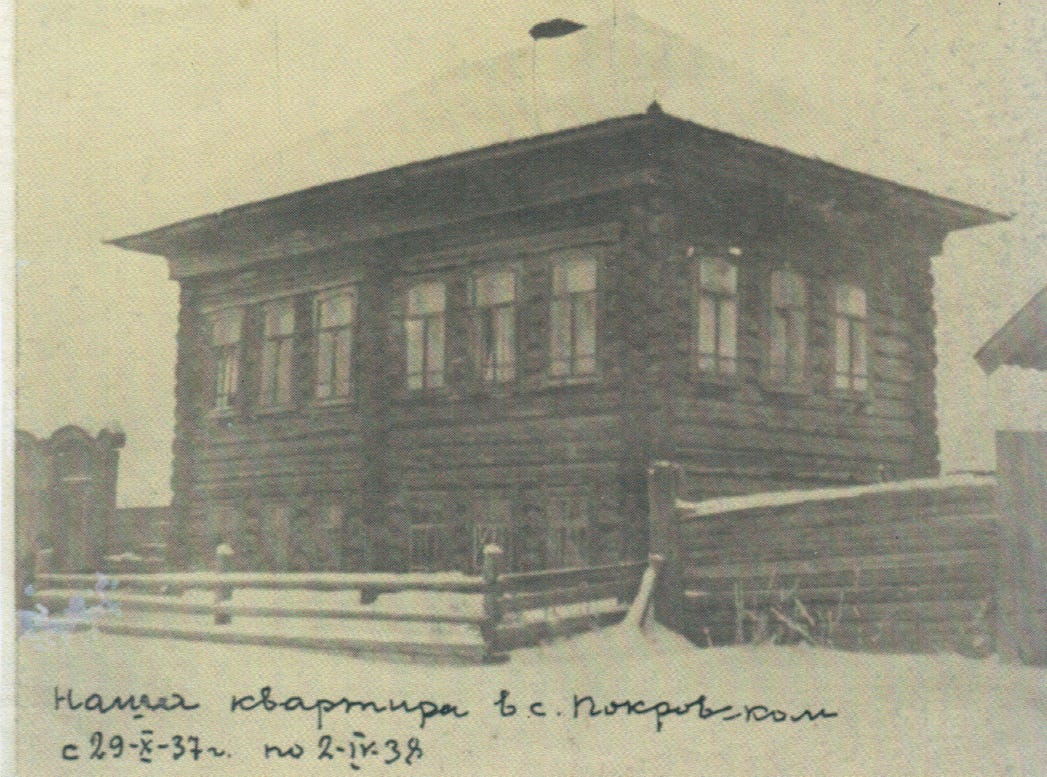
The Rasputin family home.
The Second Investigation
Not much can be said of this secret investigation, as rather than an organized inquiry, it was a special favor requested by the Empress. In 1908, after the First Investigation had been finalized, Tsarina Alexandra would ask Theophan to travel to Siberia and find the truth about Rasputin. Whether the Empress was truly doubting Rasputin or not is unknown. Theophan examined the documents from the First Investigation (Tobolsk Inquiry) and failed to find anything of interest. He confidently assured the Empress that Rasputin was a real and faithful Orthodox Christian.37
The Third Investigation
In 1912, Alexei (Molchanov), the newly appointed Bishop of Tobolsk and Siberia, traveled to Pokrovskoye to meet Rasputin and discuss issues regarding his life and faith. For starters, the idea that Rasputin belonged to the Khlyst sect was rejected due to lack of evidence, repudiated statements, and proof that Rasputin was an Orthodox Christian.38 Bishop Alexei stated that Rasputin was unequivocally “an Orthodox Christian” with “spiritual leanings (who) sought the truth of Christianity.” Most importantly, he would confess that suggestions of Rasputin’s impropriety were inspired by “all the enemies of the Throne of the Russian Tsar and His August Family.”39 Bishop Alexei’s investigation also discovered that Grigory Rasputin, despite receiving numerous donations, never kept any of them. All gifts and money were donated to the local Church. The investigation documents refer to Rasputin as “that Christian Grigorii Efimovich-Novy.”40 The official conclusion of the investigation established that Grigory Rasputin was without a doubt an Orthodox Christian who held no heretical views, belonged to no degenerate cults, and did not behave inappropriately towards anyone.41
The Fourth Investigation
In 1917, the year after Rasputin’s assassination, a new investigator opened the Tobolsk Ecclesiastical Consistory File. Professor Ilya Gromoglasov examined the documents to see if he could find proof of Rasputin’t Khlyst connections. It suffices to say that he found absolutely nothing suggesting anything different than what the previous investigations concluded: namely that Rasputin was a devout Orthodox Christian with no ties to heretical sects.42
Death
While much has already been written about Rasputin’s assassination43, some points should be extracted to illustrate his faith and loyalty to Christ and the Tsar. For starters, Rasputin’s most notorious murderer, Felix Yusupov, recalls shooting Rasputin as he was contemplating a crucifix.44 While historians consider Yusupov’s memoirs to be dramatized and mostly inaccurate45, it’s interesting to consider that even his biggest enemies recognized his faith, and murdered him for it. Rasputin, for the record, knew Felix Yusupov because he was treating him for homosexuality.46 The expert appointed for Rasputin’s autopsy was Professor Dmitry Kosorotov, who had previously worked as a forensic expert during the ritual murder investigation of 12-year-old Andrei Yushchinsky by a Jewish man named Menahem Mendel Beilis.47 According to Kosorotov, Rasputin’s Autopsy Report showed clear signs of prolonged torture, his body and genitals gruesomely disfigured by his murderers.48 These observations led historians to suggest that Rasputin, like Andrei, and later the Tsar and his family, was subjected to a ritual murder by the enemies of Orthodoxy. The spiritual significance of Rasputin’s martyrdom was undeniable. Grand Duchess Elizabeth Feodorovna would later tell Yusupov that she was visited by abbesses of many monasteries telling insane stories from the night of Rasputin’s murder: “During the night services, the priests experienced fits of madness, blaspheming and emitting inhuman cries; the nuns ran into corners, screaming like madmen and lifting their skirts with obscene movements.”49 Rasputin’s body was found in the Neva River, hands and legs tied. However, his hands had somehow managed to become free and make the sign of the cross, which is how his body was found.
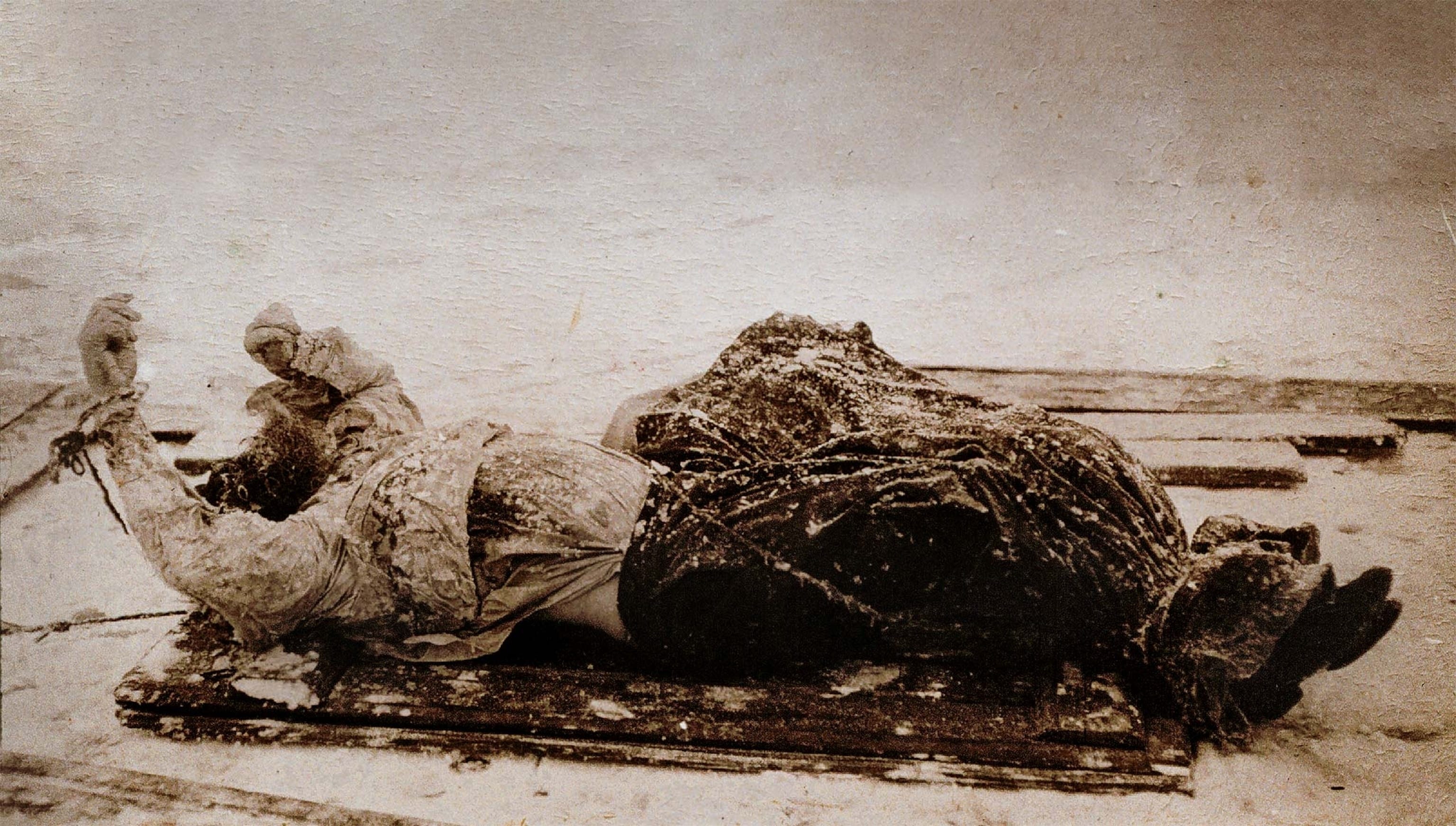
Rasputin received an Orthodox Christian funeral, attended only by the Tsar, the Tsarina, the Romanov children, Anna Vyrubova, and several other people close to Rasputin. In 1917, a few months after his murder and shortly after Nicholas “abdicated”, Rasputin’s body was exhumed during Lent and burned. This was ordered by the freemason and head of the Provisional Government Alexander Kerensky. This burning had a blasphemous character. It represented a second, devilish funeral, where the Christian burial ceremony was denied and cancelled. The following inscriptions in German (remember Heine’s poem at Ipatiev?) were found at the place where his body was burned: “Hier ist der Hund begraben.” (The dog is buried here.) (This is who is behind it all). As French Ambassador to the Russian Empire Maurice Paléologue would claim, “Those who wrote that sinister epilogue have precursors in the Italian Middle Ages.” Historian Sergei Fomin would sharply remark that they also had successors in Yekaterinburg in 1918.50 Ultimately, Rasputin had been a human sacrifice for the creation of a new degenerate and anti-Christian Russia. After all, the following was written in Russian newspapers about the sacrilegious burning of Rasputin’s body: “The ashes were scattered in the field and covered with snow. When spring comes, the water will wash away the ashes and dirt and maybe new green sprouts will erase Rasputin’s name from our memory”.51
Conclusion
Rasputin was loved by the Romanov Family until their deaths in 1918. At the time of their martyrdom, each of the Romanov daughters “wore around her neck an amulet bearing Rasputin’s picture and a prayer by the peasant ‘holy man’.”52 Tsarevich Alexei said: “There was a saint, Grigory Efimovich, but he was killed.”53 Alexei was the closest to Rasputin, and his reaction to Rasputin’s murder was heart-wrenching. “Vyrubova wrote: ‘The Tsar and the Tsarina decided not to tell him about Rasputin’s murder at once but when they finally did, Alexei Nikolaevich burst into tears hiding his head in his arms’.”54 The Tsarina stated that he was a martyr, and had a small book printed out titled “A New Martyr.”55 Rasputin died wearing a cross with the words “Save and Protect” and a bracelet with the letter N (for Nicholas) together with the Imperial two-headed eagle.56 Likewise, Tsar Nicholas died wearing a cross gifted to him by Rasputin.57
The verdict is clear: Rasputin was a devout Orthodox Christian who was martyred for never betraying his faith or the Tsar.
“I fight for the Tsar, the Faith and the Fatherland. While I am alive no harm shall ruin them, but if I perish, so shall they.”
Grigory Rasputin-Novy
While being transported from their place of detention in Tobolsk to their martyrdom in Ekaterinburg, more than one year after Rasputin’s death, the Romanovs stopped in Pokrovskoye for a change of horses.
Nicholas: “In Pokrovskoye village there was a changeover, [we] stood a long time right across Grigory’s house and saw all his family staring through the window.”
Alexandra: “Around 12 [we] arrived in Pokrovskoye, changed horses. We stood for a long time in front of the house of our Friend. Saw his family and friends watching from the windows.”58
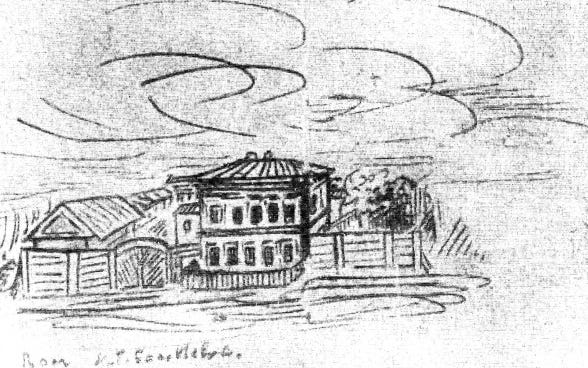
Grand Duchess Maria Nikolayevna’s drawing of Grigory Rasputin’s house and yard, 1918.
Heresch, E., Rasputin Taina ego Vlasti, OLMA-Press, Moskva, 2006, p 14
Sibirskaya Torgovaya Gazeta, 4 September 1915, reproduced in: Platonov, O. (II), Zhizn za Tsarya, Voskresenie, Sankt Peterburg, 1996, p 82
Martyr for Christ and the Tsar, Gregory the New. https://youtu.be/O-4uLbq8b0M
Ibid.
Chernyshov, A. (I), O Vozraste Grigoriya Rasputina i drugikh biographicheskikh detaliyakh, p 113
Smirnov, V and M., Neizvestnoye o Rasputine R. S., p 15
Sokolov, N., Ubiistvo Tsarskoi Semyi, Spasopreobrazhenskogo Valaamskogo Monastyr, St. Petersburg, 1998, p 247
Platonov, O., Grigorii Rasputin i Deti Dyavola, p 61
This book, originally titled “My Ideas and Thoughts” reveals Rasputin’s personal experience with the Orthodox Faith. It is written in such beautiful prose that hardly anyone could doubt the sincerity of this man’s faith.
Fülop-Miller, R., Rasputin: The Holy Devil, p 113
Frantsev, O., Grigorii Rasputin, Sovremenii Literator, Minsk, 1998, p 20
Fülop-Miller, R., Rasputin: The Holy Devil, p 133
Rasputina, M., My Father, p 49
Fülop-Miller, R., Rasputin: The Holy Devil, p 133
Rasputina, M., My Father, p 50
Yusupov, F., Lost Splendor, pp 80-84
Chеchanichev, Sergii Vladimirovich. “Страсти по архиепископу Феофану (Быстрову): К чему спекуляции, что он был духовником Царской Семьи?” Русская народная линия, August 12, 2022. https://ruskline.ru/news_rl/2022/08/12/strasti_po_arhiepiskopu_feofanu
Mironova, T., Grigori Rasputin: Belied Life – Belied Death
Phillips, A., A Life for the Tsar: Gregory Efimovich Rasputin-Novy (1869-1916), p 34
Trufanov, S., The Mad Monk of Russia, Iliodor, pp 264-265
Radzinsky, E., The Rasputin File, p 149
N. Kozlov, article “In Memory of the Elder” in the book 1994, G. E. Rasputin - New “Spiritual Heritage”, Galich, 1994, p 17
Platonov, O. (II), Zhizn za Tsarya, p 136
Not much is truly known about the Khlyst sect and its practices. Fuhrmann states that splinter groups may have participated in orgies and degeneracy, but most Khlysts were basically devout Pentecostals. They were schismatics and heretics as far as the Russian Orthodox Church is concerned.
Clay, J. Eugene. “God’s People in the Early Eighteenth Century: The Uglich Affair of 1717.” Cahiers du Monde Russe 26, no. 1 (1985): 69–124. https://doi.org/10.3406/cmr.1985.2034.
Phillips, A., A Life for the Tsar: Gregory Efimovich Rasputin-Novy (1869-1916), p 27
Nelipa, M., Killing Rasputin: The Murder That Ended the Russian Empire, p 32
Document No. 23, Protocol: Dopros Efim Rasputin, [Volume III], pp 586-587
Document No. 23, Protocol: Dopros Paraskovya Rasputina-Novaya, [Volume III], p 587
Document No. 23, Protocol: Dopros Akilina Laptinskaya, [Volume III], pp 589-590
Document No. 24, Protocol: Dopros Mikhail Ziryanov, Peter Bykov and Evdokiya Korneeva, January 4, 1908, [Volume III], pp 593-594
Document No. 29, Protocol: Response of G. Rasputin to the Investigation, [Volume III], p 597
Groyan, T., Martyr for Christ and the Tsar, p 491
Nelipa, M., Killing Rasputin: The Murder That Ended the Russian Empire, p 33
Fomin, S., Grigory Rasputin: An Investigation, [Volume III] p 481
Phillips, A., A Life for the Tsar: Gregory Efimovich Rasputin-Novy (1869-1916), p 27
Bokhanov, A. (I), Anatomiya Mifa, p 161
Nelipa, M., Killing Rasputin: The Murder That Ended the Russian Empire, pp 34-35
Ibid.
“During 1906 in October, affixed a gold cross to a church icon weighing nine zolotniks (1 zolotnik is 4.25 gm). During 1907 in April, Grigorii-Novy gave five thousand rubles for the construction of the proposed church annex. During 1908 in November, donated an 84% gilded cross weighing over one pound, plus a cross adorned with precious stones valued at ninety rubles. During 1909 and 1910 Grigorii-Novy donated to the church four silver lampadi [incense burners] weighing over four pounds, besides other church paraphernalia”
Document 45, “Raport Pokrovskogo … Episkopu Aleksiyu”, 9 November 1912, [Volume III], pp 638-639, reproduced in: Nelipa, M., Killing Rasputin: The Murder That Ended the Russian Empire, p 35
Document 46, “Ukaz Duhovnoi Consistory”, 12 November 1912, [Volume III], pp 639-642,
Document No. 1, “Zaveduishemy komnatoi veshestvennih dokazatelsv”, 31 October 1917, [Petrograd], reproduced in Fomin, S., Grigory Rasputin: An Investigation, [Volume III] p 551
Cook, A., To Kill Rasputin, p 191
Simanovich, A., Rasputin: The Memoirs of his Secretary, p 122
Mironova, T., Grigori Rasputin: Belied Life – Belied Death
“Report of the Autopsy on the body of Grigori Rasputin by Professor Kossorotov, 20 December 1916” reproduced in Cook, A., To Kill Rasputin, pp 66-67
Yusupov F., Before Exile, p 188
Fomin, S., Their Ashes – In Our Hearts
Ibid.
Massie, R., The Romanovs: The Final Chapter, p 8
Evsin, I., Oklevetannyi Starets (The Slandered Elder), p 10
Platonov, O., Murder of Grigori Rasputin
Smirnov, V and M., Rasputin
Cook, A., To Kill Rasputin, p 67
Mironova, T., Grigori Rasputin: Belied Life – Belied Death
From the Diaries of Nicholas II and Alexandra Feodorovna. Reproduced in Bastylev, Y., About the Royal Family’s Route from Tobolsk to Ekaterinburg
I remember watching "History Channel"'s documentary on Rasputin when I was just a boy. What a load of garbage. I always felt like it was a falacy, thank you for the revision of history and the cognitive dissonance 🙏🏻
Thanks for this. When I learned the truth about how Tsar Nicholas had been slandered, I wondered as to whether Rasputin's case might be similar. Subsequently, I heard that he had been vindicated by official investigations. But your article makes matters much clearer for me. The enemy of God and man is utterly flagrant in the magnitude of his deceit! 🙏☦️♥️