
“The Grand Duchess was wrong. One must be able to say this sentence to oneself and to others without any “buts,” “however,” or “at the same time”, and without the faintest thought that acknowledging her error is “disrespectful” or somehow “nullifies” her sanctity. Everyone who loves her, who venerates her holy memory, is obliged to seek the truth about all the circumstances of her life and to correct those mistakes she made for one reason or another. After all, she walked her life’s path while illuminating and pointing the way for us, and it is precisely for this reason that she was canonized.”1
Hieromonk Macarius (Markish), 2003
A common argument against Grigory Rasputin’s holiness, particularly among certain Orthodox Christians,2 is the fact that Saint Martyr Elizabeth Feodorovna despised him. Saint Elizabeth was Tsarina Saint Alexandra’s sister, and she always held suspicions about the strannik’s character. The idea is that Rasputin must have surely been evil if someone as holy as Saint Elizabeth hated him. Is this really enough to indict him of immorality, or is there perhaps more to the story?
Before we begin, I would like to remind our followers that they can support the Rasputin Archive here. We work hard to keep all content free and all donations help acquire research materials for this project. Donations will grant access to the Rasputin Archive Virtual Library, which includes rare books like the 4-volume series The Last Tsar by S.S. Oldenburg, My Father by Maria Rasputina, and Rasputin’s own book My Pilgrimage to Jerusalem.
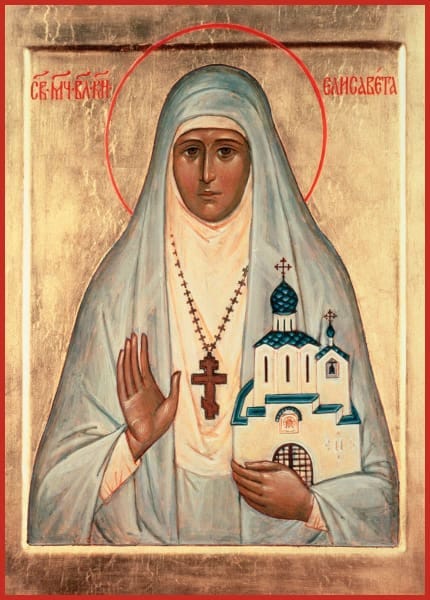
Elizabeth Feodorovna (1864-1918), born Princess Elizabeth of Hesse and by Rhine, was Tsarina Alexandra’s older sister. She married Grand Duke Sergei Alexandrovich in 1884 and converted to Orthodoxy in 1891, taking the name Elizabeth Feodorovna. She was criticized for this by her German family, yet she practiced her Orthodox faith devoutly throughout her life until her martyrdom in 1918. Her husband was assassinated by a socialist terrorist in 1905, after which she became a nun and founded the Russian Orthodox convent of Martha and Mary. She continued devoutly following Orthodox Christianity until her martyrdom at the hands of the Bolsheviks in 1918, for which she is remembered as Saint Martyr Elizabeth Feodorovna in the Orthodox Church.
The subject of the article, however, is not her holy and devout life and death, but her relationship to the holy peasant Grigory Efimovich Rasputin. Elizabeth, unfortunately, became one of Rasputin’s most ardent detractors, despite the fact that they never met in person. The cause of these feelings and the nuances in their relationship must be explored, lest we fall into the ignorant view of condemning Rasputin for a saint’s negative opinion.
What did Saint Elizabeth think of Rasputin?
Rasputin arrived in Saint Petersburg in 1904 and met the Romanovs in 1905. They started regularly meeting around 1906. His life up to this point has been explored thoroughly in the WWN Aether Hour Episode 103. Here, I join Conrad Franz and Dmitriy Kalyagin in the most exhaustive analysis of the early life of Grigory Rasputin in the English language. This is a must-watch for all our followers.
However, in 1907, allegations arose about Rasputin’s alleged sectarian activities. He became associated with the Khlysts, a sect that engaged in ecstatic rituals and degenerate behavior, including — allegedly — self-flagellation and orgies.3 This was a common accusation that Rasputin faced throughout his life. Several investigations were launched against him, all of which failed to prove that he was anything other than a canonical and genuine Orthodox Christian.4 However, these allegations tarnished Rasputin’s reputation until the end of his life, never being able to rid himself of the slander completely.
At this point in time, Elizabeth was living in Moscow at the Martha and Mary Convent she had just founded. Rasputin, conversely, was moving from Saint Petersburg to his native village of Pokrovskoye for questioning. This slander influenced many spiritually immature individuals who unfortunately believed the allegations and utilized them against Rasputin. One of these individuals was Blessed Theophan (Bystrov). It may seem outlandish to call Bishop Theophan “spiritually immature,” yet these are not our words but those of Hegumen Seraphim (Kuznetsov). Bishop Theophan, initially one of Rasputin’s closest friends, became suspicious of him due to the slanderous allegations of the Tobolsk investigation of 1907-1908. However, he maintained a good relationship with Rasputin until 1909, when he received a false confession from a woman. This '“confession” depicted Rasputin as a dangerous sexual deviant. The confession turned out to be false, which evoked great criticism from Hegumen Seraphim (Kuznetsov), as Theophan decided to break the confessional seal to tell the Tsarina about Rasputin’s alleged misdeeds. In Seraphim’s words, “[Theophan (Bystrov)] accused Grigory Rasputin of indecent behavior after a woman’s confession. Here, Bishop Theophan demonstrated his spiritual inexperience by taking the woman’s word for it, which later turned out to be a fabrication.”5
Bishop Theophan was a spiritual mentor to Elizabeth Feodorovna and perhaps the main influence behind her hatred of Rasputin, a man she had not met and would never meet in person.6 Here, Saint Elizabeth believed her spiritual mentor’s errors and became prejudiced against Rasputin. Historian Igor Evsin has written extensively on how Theophan and Elizabeth were misled to oppose Rasputin.7
Elizabeth and Theophan were also influenced by newspaper articles framed as “confessions” by women who had allegedly been wronged by Rasputin. One of these articles was titled “Grigory Rasputin and Mystical Debauchery,” written by Martyr Mikhail Novoselov. Saint Mikhail was an ardent anti-Rasputinite, which led him to write slanderous and salacious articles against him. In fact, these articles were so graphic in nature that the Tsarist government had to confiscate them under the anti-pornography laws of the Russian Empire.8 It was a grave spiritual mistake for Theophan and Elizabeth to be influenced by pornographic articles written by another holy man who allowed allegations about Rasputin to influence his perception of the truth.9 Novoselov was also a friend of Alexander Guchkov, a subversive politician who threatened to strangle the Tsar if he did not abdicate in 1917.10 Freemason11 Grand Duke Nikolai Nikolaevich, who hated Rasputin due to his anti-war stance,12 also influenced Saint Elizabeth by showing her forged reports of Rasputin’s lascivious behavior.13
Saint Elizabeth sent letters to the Tsar and Tsarina urging them to stay away from Grigory Rasputin, who she considered an impostor and a degenerate.14 She also falsely accused him of being a Khlyst.15 By her own admission, however, she had never met Rasputin in person and only heard rumors and read about him in the newspapers.16 The Romanovs, knowing Rasputin personally, did not heed Elizabeth’s insensible warnings. Saint Elizabeth, on her part, waged a propaganda campaign against Rasputin with the help of her friends Alexander Samarin17 and Saint Mikhail Novoselov, among others. Saint Elizabeth encouraged Novoselov’s pornographic and slanderous articles, as they confirmed her prejudice against Rasputin.18 It is important to consider, likewise, that Samarin was a corrupt character and friend of the Freemason Nikolai Nikolaevich, who despised Rasputin and eventually betrayed the Tsar.19 Samarin vehemently opposed the canonization of Saint John of Tobolsk, something that was only achieved thanks to a friend and alleged protégé of Rasputin, Bishop Varnava (Nakropin).20 How surprising is it that such corrupt and pernicious characters would give wrong information about Rasputin to Saint Elizabeth?
Elizabeth continued this slanderous attack against Rasputin all the way until his martyrdom in 1916. In consideration of all theories, it is likely that Rasputin was killed by Felix Yusupov with the help of Vladimir Purishkevich and Dmitry Pavlovich.21 Saint Elizabeth’s role in the murder of Rasputin is very unfortunate, as it could be argued that she was indirectly complicit and directly knowledgeable of the crime that was going to take place.
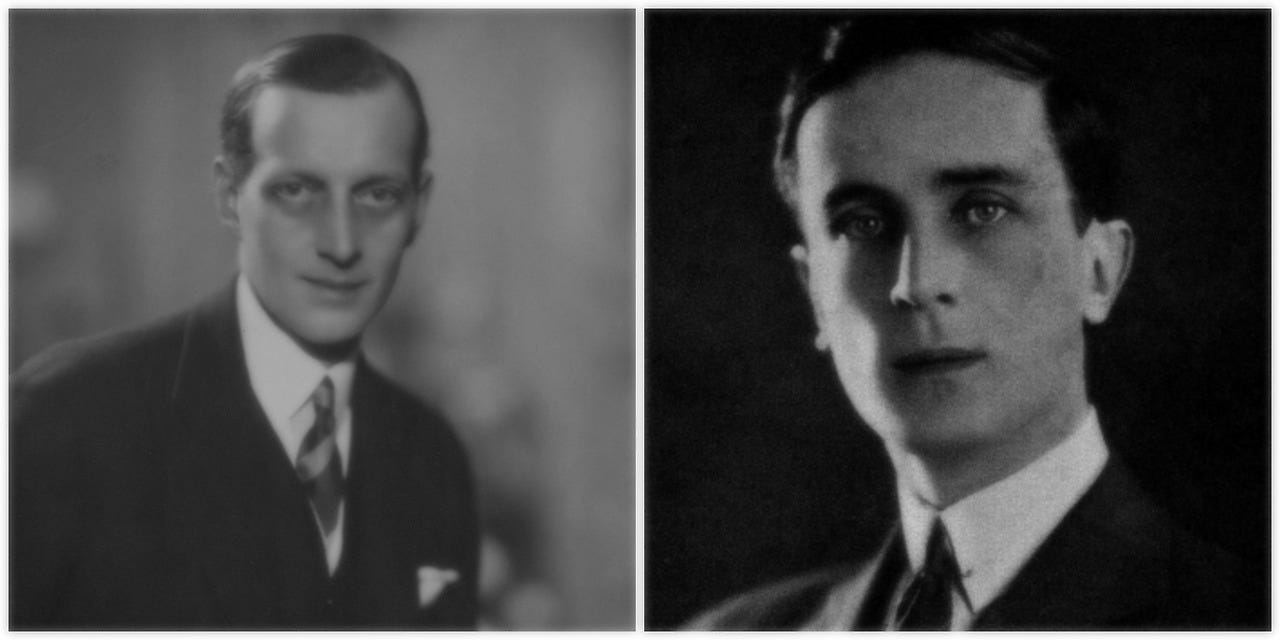
Grand Duke Dmitry Pavlovich, cousin of Tsar Nicholas II, was raised by Grand Duke Sergei Alexandrovich and Saint Elizabeth Feodorovna after the death of his mother and banishment of his father.22 Saint Elizabeth was also friends with Zinaida Yusupova, Felix’s mother. The tragedy in the martyrdom of Rasputin, for Saint Elizabeth, is that she already knew that the murder was going to occur and who would commit it. On the night of the murder, she sent a letter to the Tsar and two telegrams, one to Dmitry Pavlovich and the other to Zinaida Yusupova. The letter to Tsar Nicholas II asked him not to punish Yusupov and Pavlovich, instead suggesting that he consider the murder a “duel” and “an act of patriotism.”23 His response to all those that petitioned for leniency against the murderers was simple: “No one has the right to commit murder.”24 Likewise, the two telegrams congratulated Dmitry and Yusupov for their “patriotic act.” and said that they were in her prayers.25 It’s striking to see that “inside the shelter of the Convent of the Holy Trinity and of St. Seraphim (in the village of Diveyevo), recognized as amongst Russia’s holiest places because it holds the relics of one of Russia’s most venerated saints, St. Seraphim Sarovskii, Ella was on her knees in prayer seeking God to ‘protect’ the murderers.”26 The date and content of these telegrams also demonstrated that Elizabeth knew beforehand that Rasputin would be murdered, and rather than try to stop it, she encouraged and congratulated the perpetrators. This made her an accomplice in the murder of Grigory Rasputin. All of these messages were intercepted by the Okhrana, and copies were given to the Tsar and Tsarina, who were horrified to see Elizabeth’s complicity in the murder of their peasant friend.27 These shameful telegrams destroyed the Tsarina, who “cried bitterly and inconsolably, and [Vyrubova] could do nothing to calm her down.”28 Elizabeth’s messages were very incriminating. In fact, Yusupov himself admitted that Elizabeth’s “telegrams had severely compromised us.”29
Was she right?
Evidently not. Her sources of information were incredibly corrupt, and her spiritual immaturity led her to support one of the gravest sins, murder. How can this be reconciled with her sainthood? We must understand that Saint Elizabeth was not a perfect person and made many grave mistakes during her life. One of these, for example, was declaring her loyalty and support for the liberal Provisional Government after the forced abdication of Tsar Nicholas II.30 On the matter of her religious life, Saint Elizabeth would write, “I try to find a way and will make mistakes.”31 Even she did not believe herself to be infallible, yet Rasputin’s detractors demand that we accept her “testimony” as fact. Her case, however, is different from the other haters of the holy peasant. Subversives like Yusupov, Dzhunkovsky, Rodzianko, Tyutcheva, and Guchkov despised a specific person, Grigory Rasputin. Elizabeth, on the other hand, hated “a phantom, a non-existent mirage, an obsession,” as she did not know the true Rasputin.32 An excellent article on the reconciliation between her human mistakes and holy martyrdom has been written by Hieromonk Macarius (Markish).33 Was she sinning by slandering Rasputin? Yes, there is no doubt about it. In fact, it could be argued that she was an accomplice in his martyrdom. However, she faced her own martyrdom with profound faith, for which she was forgiven by God and reconciled with the holy peasant in heaven. In the words of Grigory Rasputin, "Yes, it is a sin! But the Lord is merciful!"34
See for example Michael W. Davis, “Was Rasputin a Saint?” Union of Orthodox Journalists, January 6, 2026, https://uoj.news/history-and-culture/86000-was-rasputin-a-saint
Not much is truly known about the Khlyst sect and its practices. Fuhrmann states that splinter groups may have participated in orgies and degeneracy, but most Khlysts were basically devout Pentecostals. They were schismatics and heretics as far as the Russian Orthodox Church is concerned.

Hegumen Seraphim. Orthodox Tsar-Martyr. Moscow, 2000. pp 82-83.
Phillips, A., A Life for the Tsar: Gregory Efimovich Rasputin-Novy (1869-1916), pp 36-37 and Fomin, S., Grigory Rasputin: An Investigation, [Volume IX] pp 392-395
In accordance with Article 1001 of the Penal Code
Sidorov, A. From the notes of a Moscow censor//Voice of the Past, 1918. N 1-3. p 98. Quoted from: Fomin, S. The lie is great, but the truth is greater. Moscow, 2007. p 128.
Fomin, S. The Lie is Great, but the Truth is Greater. Moscow, 2007. p 130
Chechanichev, S. V. (2019, May 24). Grigorii Rasputin i novomucheniki Tserkvi Russkoi [Grigori Rasputin and the New Martyrs of the Russian Church]. Russkaya narodnaya liniya. https://ruskline.ru/analitika/2019/05/25/grigorij_rasputin_i_novomucheniki_cerkvi_russkoj
Evgeni Vernigora, “A Dossier of Betrayal: The Abdication of Nicholas II, 1917,” OrthodoxLife, June 13, 2018, https://orthodoxlife.org/lives-of-saints/nicholas-ii-abdication-1917-vernigora/
A.I. Spiridovich. Security and Anti-Semitism in Pre-Revolutionary Russia. Questions of History. Moscow, 2003. N8. See also Oleg Platonov. Russia’s Crown of Thorns. The Conspiracy of the Tsaricides. Moscow, 1996. p 514. Sergey Fomin. The Lie is Great, but the Truth is Greater. Moscow, 2007. p 308
A.I. Spiridovich. Security and Anti-Semitism in Pre-Revolutionary Russia. Questions of History. Moscow, 2003. N8. p 23. See also Oleg Platonov. Russia’s Crown of Thorns. The Conspiracy of the Tsaricides. Moscow, 1996. p 514. Sergey Fomin. The Lie is Great, but the Truth is Greater. Moscow, 2007. p 308
These fabrications were made by the Minister of Internal Affairs, A.N. Khvostov, and his deputy, S.P. Beletsky.
Oleg Platonov. Russia’s Crown of Thorns. Prologue to the Tsaricide. The Life and Death of Grigori Rasputin. Moscow, 2001. pp 203-212. Sergey Fomin. The Lie Is Great, But the Truth Is Greater. Moscow, 2010. pp 316-317. Smirnov V., Smirnova M. Unknown about Rasputin. PS Tyumen, 2006. pp 56-57.
Materialy k Zhitiyu, p 46 reproduced in Hugo Mager, Elizabeth, Grand Duchess of Russia (New York: Carroll & Graf, 1998). pp 251-253
Radzinsky, E. (I), The Rasputin File, p 172
Varlamov A. N., Grigory Rasputin-Novy, 2007 reproduced in Chechanichev, S. V. (2019, May 24). Grigorii Rasputin i novomucheniki Tserkvi Russkoi [Grigori Rasputin and the New Martyrs of the Russian Church]. Russkaya narodnaya liniya. https://ruskline.ru/analitika/2019/05/25/grigorij_rasputin_i_novomucheniki_cerkvi_russkoj
Later Procurator of the Holy Synod
Hugo Mager, Elizabeth, Grand Duchess of Russia (New York: Carroll & Graf, 1998). pp 255-256
Multatuli, P. V. (2017). Gospodʹ da blagoslovit reshenie moe (Imperator Nikolai II vo glave deistvuiushchei armii i zagovor generalov) [May the Lord bless my decision (Emperor Nicholas II at the head of the active army and the conspiracy of the generals)] (Part 3). Moscow.
Nelipa, M., Killing Rasputin: The Murder That Ended the Russian Empire, p 370
Grand Duchess Marie Pavlovna, Education of a Princess - A Memoir, Blue Ribbon Books, New York, 1934, p 22
Letter from Grand Duchess Elizaveta Fyodorovna to Nikolai II - 16/17 December 1916 reproduced in Nelipa, M., Killing Rasputin: The Murder That Ended the Russian Empire, pp 372-373
Nelipa, M., Killing Rasputin: The Murder That Ended the Russian Empire, p 357
Nelipa, M., Killing Rasputin: The Murder That Ended the Russian Empire, p 373
Nelipa, M., Killing Rasputin: The Murder That Ended the Russian Empire, p 220
Yusupov, F. (I), Konetz Rasputina, p 201
Vyrubova, A. Maid of Honor to Her Majesty. Moscow, 1990, p 176 reproduced in Platonov, O., A life for the Tsar (The Truth About Grigori Rasputin)
Yusupov, F. (I), Konetz Rasputina, p 201
“Recognizing the importance for all to support the new government, I announce that from my side I fully support it.”
GARF. F. 1778. Op. 1. D. 283. L. 27-28, D. 300, L. 34; Russian invalid. Petrograd. March 15, 1917, No. 64; Golovin, N. N. Russia's military efforts in the world war. Vol. II. Paris, 1939. p 180 reproduced in https://rusk.ru/st.php?idar=424307
Materials for the Life of the Holy Martyr Grand Duchess Elizabeth. P. 27. Quoted from: Sergei Fomin. The Lie is Great, but the Truth is Greater. Moscow, 2007. P. 14
Yuri Rassulin, “Great Holy Martyr Elizabeth and the Elder Gregory: The Love of the Saints (An Orthodox Christian’s View of the Attitude of the Holy Martyr Grand Duchess Elizabeth Feodorovna toward Grigory Rasputin)”, Proza.ru, December 30, 2017, https://proza.ru/2019/02/16/1783
Platonov O. A. Russia's Crown of Thorns. Prologue to the Regicide. The Life and Death of Grigory Rasputin. Moscow: Encyclopedia of Russian Civilization, 2001. Pp. 268-269.
What you are doing is important, keep it up
We need him back. Waiting for his return